How to Find a Lost Cat: The First 24 Hours
Every cat owner remembers the moment the house goes quiet in the wrong way: the food bowl is untouched, the favorite windowsill is empty, and the screen door is ajar. If your indoor cat got out, or your cat went missing from the yard, the next day matters more than any other. This guide on how to find a lost cat walks you through the first 24 hours in order, with the reasoning behind each step, so you can act calmly and thoroughly rather than frantically. It is written owner-to-owner, for households in every U.S. state, and it is honest about what tends to work and what does not.
One reassuring note before we begin: many lost cats are found close to home, often hiding and silent rather than wandering far. Outcomes are never guaranteed, and every cat and neighborhood is different, but a methodical search gives you the best realistic chance. If you are wondering lost cat what to do right now, start with Step 1 and work forward.
What You Will Need
Gather these before you leave the house. Most are already in a kitchen drawer or garage.
- A bright flashlight (a headlamp keeps your hands free). A cat's eyes reflect light, which makes them far easier to spot at night.
- Strong-smelling food such as tuna, sardines, or warmed wet food, plus a treat bag or a can that makes a familiar sound.
- A recent, clear photo of your cat from the front and side, plus a note of any distinguishing marks.
- Your cat's microchip number and the registry or company it is enrolled with, if your cat is chipped.
- A cat carrier with a towel inside, and a humane trap if you can borrow one (many animal shelters and rescue groups lend them).
- Paper, markers, tape, and zip-top bags for flyers that survive the weather.
- Your phone, charged, with neighbors' numbers saved if you have them.
- A worn item with your scent, such as a T-shirt, and the used litter from your cat's box.
Step-by-Step: The First 24 Hours
Step 1: Search your own home first, thoroughly (minutes 0 to 30)
It sounds obvious, yet a surprising number of cats who seem to have gone missing are still inside. Frightened or injured cats can wedge themselves into spaces that look far too small. Check inside the dryer, behind the refrigerator, in box springs, inside couch lining, in cabinets under sinks, in the laundry basket, in the garage, and in any closet that was opened in the last day. Shake a treat bag and listen in silence for a few seconds between calls, because a hidden cat often answers with the quietest sound.
If your cat is an indoor cat who got out, a door or window left open earlier in the day is a clue to where the cat exited and the direction they may have headed. Note the time you last saw your cat; you will need it for flyers and reports.
Step 2: Search the immediate area on foot, low and slow (minutes 30 to 90)
An indoor cat that escapes is usually overwhelmed. Unfamiliar sounds, open space, and strangers can push a cat into freeze-and-hide mode within a short distance of the door. Walk your yard and the yards next to yours, then widen outward in a ring over the following hours.
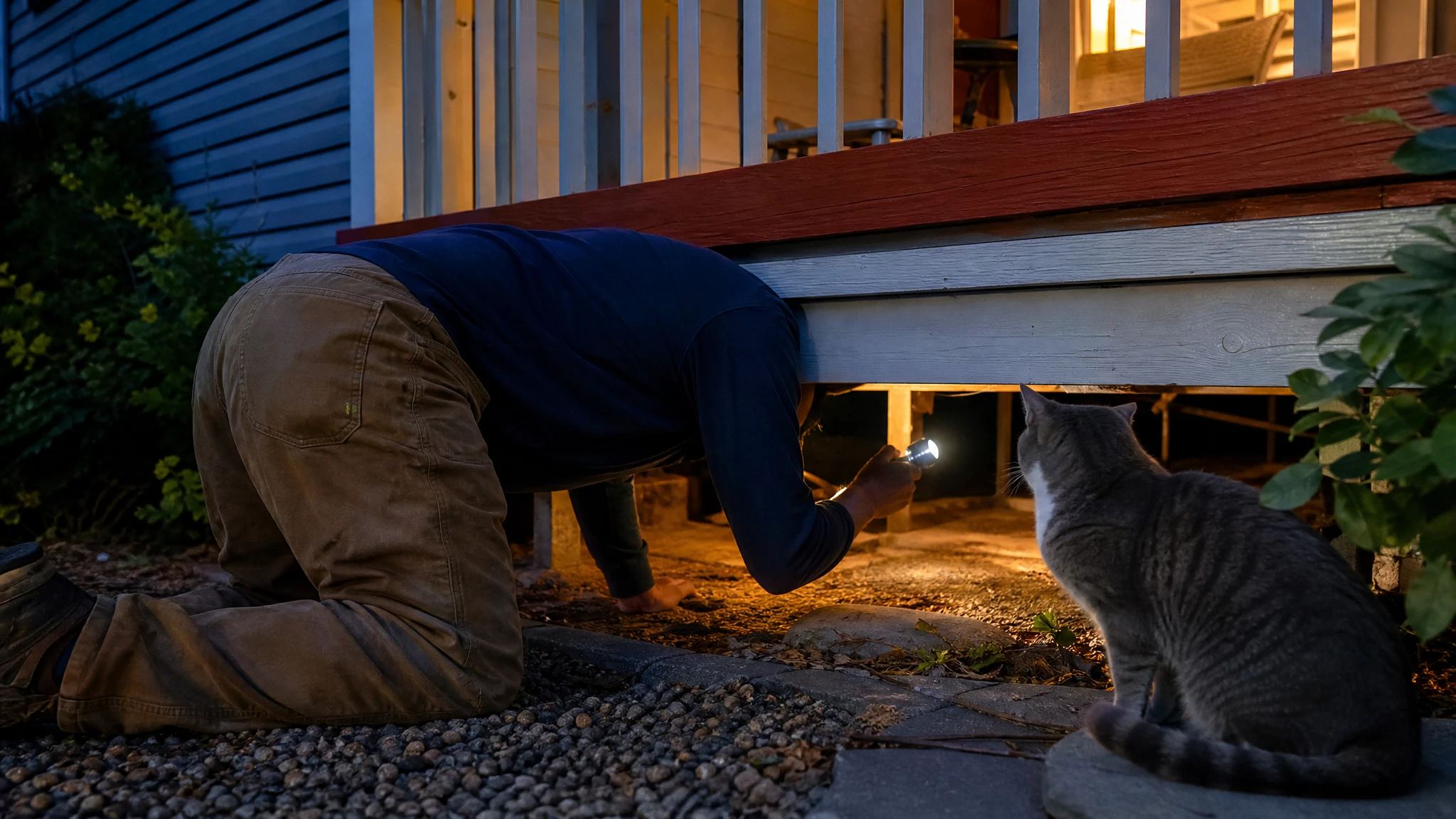
- Get down to cat height and look under porches, decks, parked cars, sheds, hedges, wood piles, and in window wells.
- Sweep the flashlight slowly and look for the green or gold glint of eye-shine.
- Call softly in your normal voice instead of shouting. A hiding cat that recognizes your voice may respond, but a panicked shout can send them deeper into cover.
- Pause often. Stand still for a full minute at each stop and listen.
Search at the quietest times of day, such as late evening, overnight, and early morning, when traffic noise drops and cats tend to move. Cats are naturally most active at dawn and dusk.
Step 3: Talk to the neighbors in person (hours 1 to 3)
Knock on doors within a few blocks. Show the photo on your phone and ask each household to check their garage, shed, crawl space, and basement, since cats can slip into spaces and get shut in without anyone noticing. Ask permission to look in their yard. Leave a flyer with your phone number. People are far more willing to look when asked face to face, and neighbors with outdoor cameras may be able to check footage for your cat.
Mail carriers, delivery drivers, and landscapers cover a neighborhood daily and are worth a polite question as well.
Step 4: Check your microchip and update every record (hours 2 to 4)
If your cat has a microchip, contact the chip company or registry today and confirm that your phone number and address are current. A chip only helps a finder reach you if the contact details attached to it are correct. Ask whether the company can flag the chip as missing and alert you if a shelter or veterinarian scans it.
If your cat is not chipped, do not lose heart; the remaining steps still apply. Consider chipping once your cat is home, and keep a breakaway collar with a legible tag on an indoor-outdoor cat.
Step 5: Contact local shelters, animal control, and veterinary clinics (hours 3 to 6)
Call, then follow up in person if you can. Phone calls alone are not enough, because staff may describe a cat differently than you would. Visit the shelters and the animal control office serving your area and look through the intake cages yourself. Bring your photo and give them your contact details in writing.
Call nearby veterinary clinics and emergency animal hospitals as well, since a kind stranger may have brought in an injured cat. Rules about holding periods for found animals vary from place to place, so ask each facility how long they keep strays, and plan to check back regularly. For anything involving your local ordinances, your local animal control office is the right source.
Step 6: Make flyers that people can read in three seconds (hours 4 to 8)
A good flyer is simple. Use the word LOST CAT in very large letters, one clear color photo, the area and date the cat went missing, and your phone number. Skip long paragraphs. Include one distinguishing feature, such as a white sock or a torn ear, but consider keeping one detail back so you can verify a caller who claims to have your cat.
- Post at street corners, near mailbox clusters, at vet offices, pet supply stores, community boards, and anywhere people stop and wait.
- Place flyers at eye level for drivers and pedestrians alike, and put them in plastic sleeves to survive rain.
- Check local rules or ask permission where required before attaching flyers to poles or private property.
Step 7: Post online in the right places (hours 4 to 8)
Share your photo and details in neighborhood social groups, local lost-and-found pet pages, community apps, and the websites of nearby shelters. Include the area where your cat was last seen, not your exact street address, and a phone number. Respond to every message promptly and politely, even the ones that turn out to be wrong.
Be careful with strangers. Never send money to anyone who says they have your cat and asks for payment in advance; recovery scams do circulate. Meet any finder in a public place, ideally with another person, and ask for a photo of the cat first.
Step 8: Set up scent stations and a feeding station (hours 6 to 12)
Place your cat's used litter, a worn T-shirt, and a familiar blanket just outside the door they left through. Some owners also leave a small amount of strong-smelling food nearby. Scent can help a nervous cat orient themselves and find their way back. Avoid putting out food in a way that attracts raccoons or other wildlife; if you can, use a covered feeding spot, and check it often.
An old belief says cats should be brought food only at their house. In practice, a hungry hiding cat may only creep out in the quietest hours, so a modest, stable station is worth trying.
Step 9: Search again at night with a flashlight (hours 10 to 16)
Nighttime is often the best time to find a lost cat. Walk the same ring you did earlier, but go slowly and silently. Cats who hide by day may move after dark, when the neighborhood is calm. Listen for rustling, faint meows, and bells. Scan fences, tree branches, and the roofs of low sheds with your light. If you hear a faint answer, stay put and keep your voice low and steady.
Step 10: Consider a humane trap, with care (hours 12 to 24)
If you have a likely hiding area, such as a neighbor's yard where eye-shine was spotted, a humane trap baited with strong-smelling food can be effective. Follow the lender's directions precisely, check the trap often, never leave a trapped cat unattended, and cover it with a towel to calm them. Ask the property owner for permission first. If you borrow a trap from a shelter or rescue, they can usually tell you how best to place it.
A motion-activated trail camera aimed at the feeding station is a low-effort way to learn whether your cat is visiting at night, so you know when and where to focus.
Common Mistakes to Avoid
- Assuming your cat will simply come home. Some do, but waiting passively wastes the most valuable hours.
- Searching only in daylight. Many frightened cats stay silent and hidden until dark.
- Chasing or shouting. A cat that panics may bolt away from the area. Be calm and let your cat come to you.
- Searching far away too soon. Start close to home and expand gradually.
- Posting your full address publicly. Share the general area and a phone number only.
- Giving up on the shelters after one call. Revisit them in person every day or two.
- Paying a stranger in advance. Genuine finders do not demand money before showing you the cat.
- Taking flyers down too soon. Replace worn flyers and keep going for weeks, not days.
Tips That Make a Real Difference
- Ask a friend to help. Two people covering the area at different times double your coverage and give you someone to share the emotional load.
- Keep a simple log with times, places searched, and sightings, so you can see patterns.
- Leave a window or door cracked only if it can be done safely for a cat to return, such as a protected garage or screened porch, and not in a way that invites wildlife or other animals.
- Keep the household's other cats calm and indoors, since a returned cat may be stressed and a familiar companion can help.
Prevention: Registration, Identification, and Your Emotional Support Cat
Once your cat is home, take a few steps so a future scare ends faster. Make sure the microchip is registered with current details, add a breakaway collar with a tag, and keep recent photos on your phone. Screens, door sweeps, and a calm routine at the front door all lower the odds of an escape.
If your cat is also your emotional support animal, there is a separate question many owners ask. Registering a cat is optional and is not a legal requirement. Housing protections under the federal Fair Housing Act come only from a letter written by a licensed mental health professional (LMHP) who is licensed in your state, as described in HUD's notice FHEO-2020-01, and not from a registry listing, ID card, or certificate. A landlord is not required to accept a registration number or ID card in place of that letter.
What a registration service can honestly offer is practical: a lost-pet recovery database that helps a finder or shelter reach you, an ID card and certificate you can keep with your cat's records, and, on this site, a discount on an ESA letter if you choose to pursue one. For many owners the lost-pet recovery benefit is the real draw, which is why we raise it here. To learn how the optional process works and what it does and does not do, read how to register your cat as an emotional support animal.
If you are considering an ESA letter for housing, a licensed clinician will determine whether an emotional support animal is therapeutically appropriate for you. Many people with anxiety, depression, or other mental-health concerns find the companionship of a cat helpful, but approval is never automatic. Some states have their own rules about who may issue a valid letter and how long the clinician must have worked with you before issuing one, so review your state's specific requirements and be wary of fly-by-night online services or registries that sell a cheap certificate and promise instant results.
Also keep in mind that emotional support animals are not covered by air-travel protections. Airlines treat ESAs as ordinary pets, so ask the carrier about its pet policy and carrier requirements well ahead of any trip.
What You Can Reasonably Expect
Every search is different, and no one can promise a result. That said, here is what owners commonly find when they follow a structured approach:
- Many cats who go missing are located within a short distance of home, often hiding quietly. A close-in, patient search may help you find yours.
- Chipped cats with current contact details may be easier for shelters and clinics to return.
- Neighborhood awareness, through flyers and conversations, can generate sightings you would never reach alone.
- Some cats return on their own after a night or two, especially once they feel safe enough to move again.
- Others take longer. Staying persistent for weeks, rechecking shelters, and refreshing flyers often matters more than any single tactic.
When your cat is back, offer water and a small meal, check for injuries, and call your veterinarian if anything seems off, such as limping, lethargy, or wounds. Then update everyone you contacted so they can stop looking.
Frequently Asked Questions
How far does an indoor cat usually go?
It varies, but a cat that has never been outdoors often hides within a short distance of the exit point. Searching nearby first is a sensible approach.
Should I leave food outside?
A small, covered feeding station can help, as long as you monitor it for wildlife and keep it close to where your cat was last seen.
Is it too late if more than a day has passed?
No. Continue every step on this list and keep checking shelters. Many cats are found after days or even weeks.
Does a registry replace a microchip?
No. A microchip and a recovery database work best together, and both depend on your contact details being up to date.
Important Disclaimer
This article is informational content only. It is not medical, mental-health, veterinary, or legal advice. If you are considering an emotional support animal, consult a licensed mental health professional who is licensed in your state to determine whether an ESA is appropriate for you, and review your state's specific rules. For housing disputes or questions about your rights as a tenant, consult an attorney licensed in your state, or contact your local legal aid office. For concerns about your cat's health, speak with your veterinarian. Rules about found animals and local ordinances vary, so check with your local animal control office.
Ready to start your ESA letter?
Licensed clinician review. Compliant with state law.
Get My ESA Cat Letter