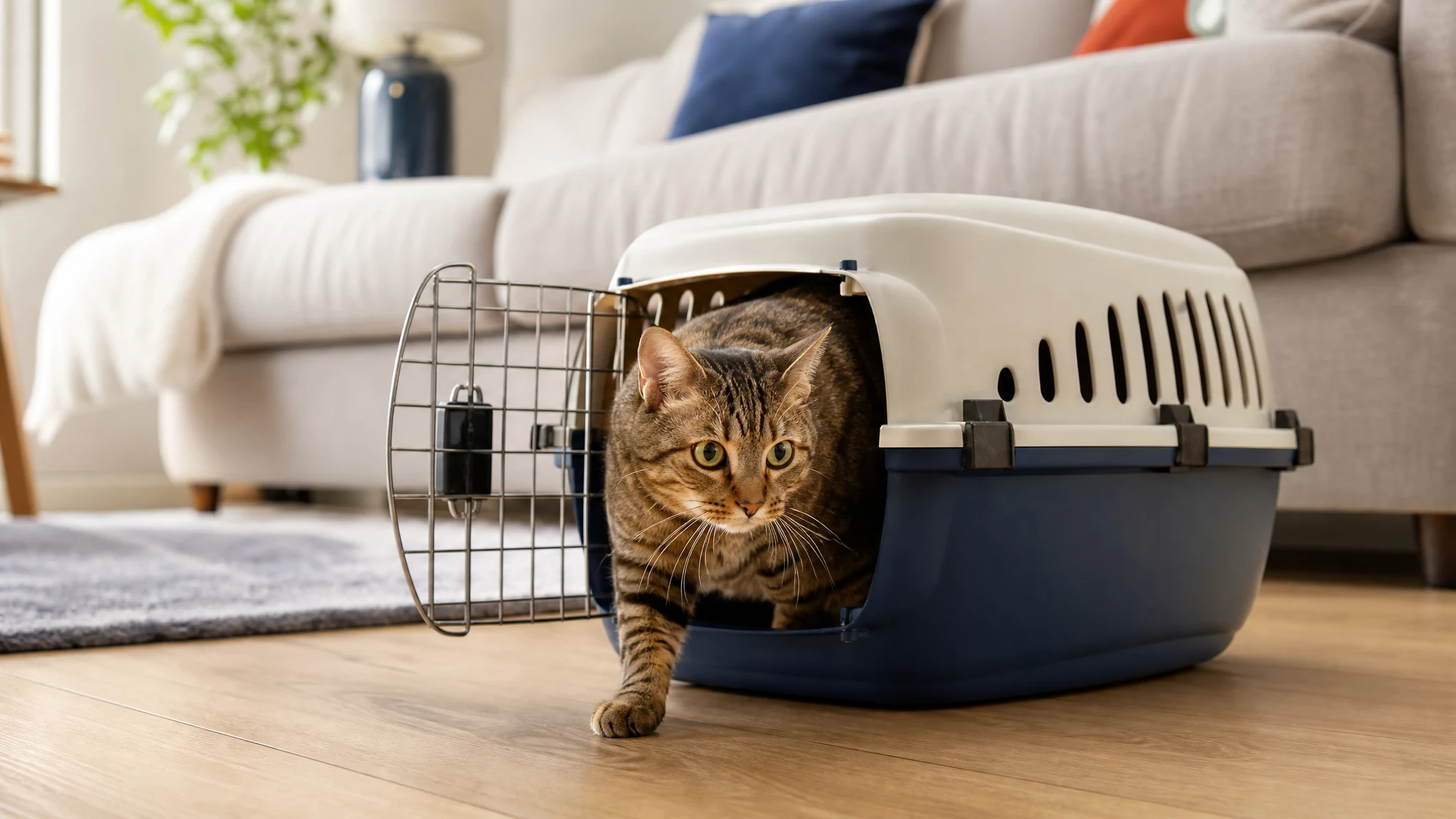
Emotional Support Cat Training: What You Can and Cannot Train
Few questions reach us as often as this one: does my cat need training to be an emotional support animal? The honest answer is more reassuring than most owners expect. Under the federal Fair Housing Act, an emotional support cat is not required to pass a test, perform a task, or complete a course. What matters legally is a valid letter from a licensed mental health professional, and what matters practically is that your cat lives peaceably in your home. This guide separates what the law asks of you from what good cat training can add, so you can spend your effort where it counts.
Informational only: this article is general information, not medical, mental-health, or legal advice. Please consult a clinician licensed in your state about whether an emotional support animal is therapeutically appropriate for you, and an attorney licensed in your state for any housing dispute.
What the Law Does and Does Not Require
HUD's notice FHEO-2020-01, Assessing a Person's Request to Have an Animal as a Reasonable Accommodation Under the Fair Housing Act, is the federal authority for emotional support animals in housing. It does not require an assistance animal to be trained to perform tasks. That is the key distinction between an emotional support animal and a service animal: a service dog is individually trained to do specific work, whereas an emotional support cat is recognised for the comfort its presence may provide to a person with a disability-related need.
Three practical points follow from this:
- No training certificate is needed. No landlord is entitled to demand one, and no training programme can substitute for the letter.
- Behaviour still matters. HUD's guidance allows a housing provider to consider whether a specific animal poses a direct threat or would cause substantial damage that cannot be reduced by other means. A cat that is clean, quiet and settled is simply the easiest cat to live with, and the easiest to defend.
- The letter comes from a clinician. It must be written by a licensed mental health professional (an LCSW, LMHC, LMFT, psychologist, psychiatrist, or a licensed primary-care provider where your state permits) who is licensed in the same state as you.
What You Cannot Train (and Should Not Pretend You Have)
Cats are not dogs, and honest training advice starts there. You cannot reliably train a cat to obey on command, to stay put for long periods, or to perform therapeutic tasks such as interrupting a panic episode. You also cannot create a legal status through training. Be wary of any service that sells an “ESA training certification” or a “certified emotional support cat” badge; no such legal status exists, and a $40 certificate bought online grants no housing rights.
It is equally important not to confuse the three categories people often blend together:
| Category | Training required? | Where the protection comes from |
|---|---|---|
| Emotional support cat | None required by federal law | FHA housing accommodation, supported by a clinician's letter |
| Therapy cat | Set by each facility or volunteer organisation | Facility permission only; no housing or public-access rights |
| Service animal (dogs, and in limited cases miniature horses) | Individually trained for specific tasks | ADA |
Air travel deserves a plain note. Since the Department of Transportation's 2021 rule, airlines treat emotional support animals as ordinary pets, so a letter does not give your cat cabin rights. Check your airline's pet policy directly, and use a secure, airline-compliant carrier.
What You Can Train: The Skills Worth Building
Training for a cat is really about comfort and predictability: teaching your cat that handling, carriers, visitors and routine are safe. Done patiently, it may make daily life smoother for both of you, and it is the foundation if you later explore volunteer therapy work.
Materials You Will Need
- Small, soft, high-value treats (a lickable paste or tiny pieces of cooked chicken work for many cats)
- A well-fitted, escape-proof cat harness and a lightweight leash
- A hard-sided or sturdy soft carrier with a removable top
- A clicker or a consistent marker word such as “yes” (optional)
- A soft brush, a familiar blanket and a quiet room
- A notebook for short daily session notes
Step-by-Step: Building a Calm, Confident Support Cat
Step 1: Start with a veterinary check
Before changing anything, book a wellness exam. Pain, dental trouble and thyroid or kidney problems can all look like “bad behaviour” in cats. A cat that hides, swats when touched or avoids the litter tray deserves a medical answer first. Ask your veterinarian about vaccinations and parasite prevention as well; housing providers and clinicians alike are reassured by a healthy, well-kept animal.
Step 2: Set up a secure home base
Give your cat a predictable territory: a litter tray in a quiet spot, a scratching post, a high perch, and one hiding place that is never disturbed. Confident cats are usually cats who feel in control of their space. Keep feeding times steady, because routine is the single most calming signal you can offer.
Step 3: Teach gentle handling
Over one to two weeks, run three or four sessions a day of about two minutes each. Touch a shoulder, then reward. Touch a paw, then reward. Progress to brushing, lifting a paw, glancing at the ears and holding your cat briefly on your lap. Stop while your cat is still relaxed. Flattened ears, a flicking tail or dilated pupils mean you have moved too fast; step back to the last easy stage.
Step 4: Make the carrier a favourite place
Leave the carrier out permanently with the door open, a blanket inside and treats tucked at the back. Once your cat enters voluntarily, close the door for a few seconds, reward, and open it. Build to carrying it across the room, then to the car park and back. Cats who have learned that the carrier predicts good things generally cope better with vet visits and moves.
Step 5: Introduce the harness
Let your cat sniff the harness, then rest it on the back for a treat, then fasten it indoors for a few minutes at mealtime. Only when your cat walks normally in it should you clip on the leash, and then simply follow your cat around the house. Outdoor exploring is optional and should be limited to quiet, secure areas. Never use a collar to restrain a cat.
Step 6: Teach a few simple cues
Most cats can learn a recall (“come”), a “place” cue to settle on a mat, and a gentle “touch” to your hand. Mark the instant your cat does the right thing, then deliver the treat. Keep sessions under three minutes and end on a success. These cues are conveniences, not requirements, and a cat who prefers to ignore you on a Tuesday is behaving like a cat.
Step 7: Practise with visitors and new sounds
Invite one calm friend at a time, and let your cat approach on its own terms; visitors should ignore the cat until it chooses to come over. Play recordings of doorbells, vacuum cleaners and neighbour noise at low volume while your cat eats, raising the volume over several weeks. Quiet neighbours are an important part of any good housing arrangement.
Step 8: Decide whether therapy-cat work suits your cat
If you are curious about how to train your cat to be a therapy cat, it helps to know that this is a different path from an ESA letter. Cat therapy training generally means preparing a very sociable cat for supervised volunteer visits to hospitals, schools or care homes. Organisations set their own requirements, which commonly include a temperament assessment, up-to-date vaccinations, comfort with harness and carrier, and tolerance of crowds and unfamiliar handling. Many cats, including wonderful emotional support cats, simply prefer being at home, and that is perfectly acceptable. Therapy visits never replace your housing letter and do not create housing rights.
Step 9: Keep your paperwork in order
Training is not paperwork, but the two work well together. Keep your letter, your vet records and a short note on your cat's routine in one folder. If you do not yet have a letter, our guide on how to register your cat as an emotional support animal explains how the clinician evaluation works.
A Note on Registration and ID Cards
Registration is optional and is not a legal requirement. Housing rights under the Fair Housing Act come only from a letter written by a licensed mental health professional, and a landlord is not obliged to accept a registration number, certificate or ID card in place of that letter. What an optional registration can offer is practical: first and foremost, a lost-pet recovery database that helps reunite a missing cat with you, along with an ID card and certificate and a discount on the ESA letter for those who want them. Your cat is never legally “certified” by any of it.
State Rules That Affect Your Letter
Training looks the same in every state, but the rules for obtaining a letter do not. A few examples worth knowing:
- Florida: Florida Statute 760.27 requires the clinician to be licensed in Florida or to have an established prior in-person relationship with you. Online-only providers licensed elsewhere cannot issue a valid Florida letter.
- California, Montana, Arkansas, Iowa and Louisiana: state law requires an established therapeutic relationship of at least 30 days with the clinician before a letter can be issued. This is a feature of those states' consumer protections, and no legitimate provider can shorten it.
- Every other state: the clinician should be licensed in your state and should evaluate you individually. Be cautious of anyone promising instant or guaranteed approval; a real evaluation means approval is never automatic.
Rules change, so confirm the current requirements for your state before you begin.
Common Mistakes to Avoid
- Punishing a cat. Yelling or spraying water damages trust and tends to increase hiding and aggression. Redirect and reward instead.
- Long sessions. Cats tire quickly. Several two-minute sessions beat one twenty-minute attempt.
- Rushing the harness or carrier. Forcing either one can undo weeks of progress.
- Buying a “training certificate.” It adds no legal protection and may mislead you about your rights.
- Ignoring stress signals. Hiding, over-grooming and appetite changes warrant a veterinary conversation.
- Presenting a registration card as the letter. It will not substitute for one.
Tips for Better Results
- Train before meals, when treats are most appealing.
- Use one marker word consistently, and have everyone in the household do the same.
- Let your cat set the pace; shy cats may need weeks per stage.
- Keep a quick log: what worked, what did not, how your cat's body language looked.
What Results to Expect
With short, consistent sessions, many owners find that their cats grow noticeably more relaxed with handling, travel and visitors within four to eight weeks, though every cat differs and some will always prefer a quiet home. Many people with anxiety, depression or related conditions find that a settled, affectionate companion cat is a helpful part of their daily routine, and a licensed clinician will determine whether an emotional support animal is therapeutically appropriate for you. Training is not a treatment, and it does not guarantee any particular outcome for you or your cat.
Next Steps and Disclaimer
If you are weighing an ESA letter, begin by speaking with a mental health professional licensed in your state, and review your state's specific rules, including any waiting period. If a landlord disputes your accommodation request, your local legal aid office or an attorney licensed in your state can advise you; HUD also accepts fair-housing complaints.
This article is informational content only. It is not medical, mental-health, or legal advice, and it does not create a clinician-patient or attorney-client relationship. Always consult a qualified mental health professional licensed in your state, and an attorney licensed in your state for housing disputes.
Ready to start your ESA letter?
Licensed clinician review. Compliant with state law.
Get My ESA Cat Letter