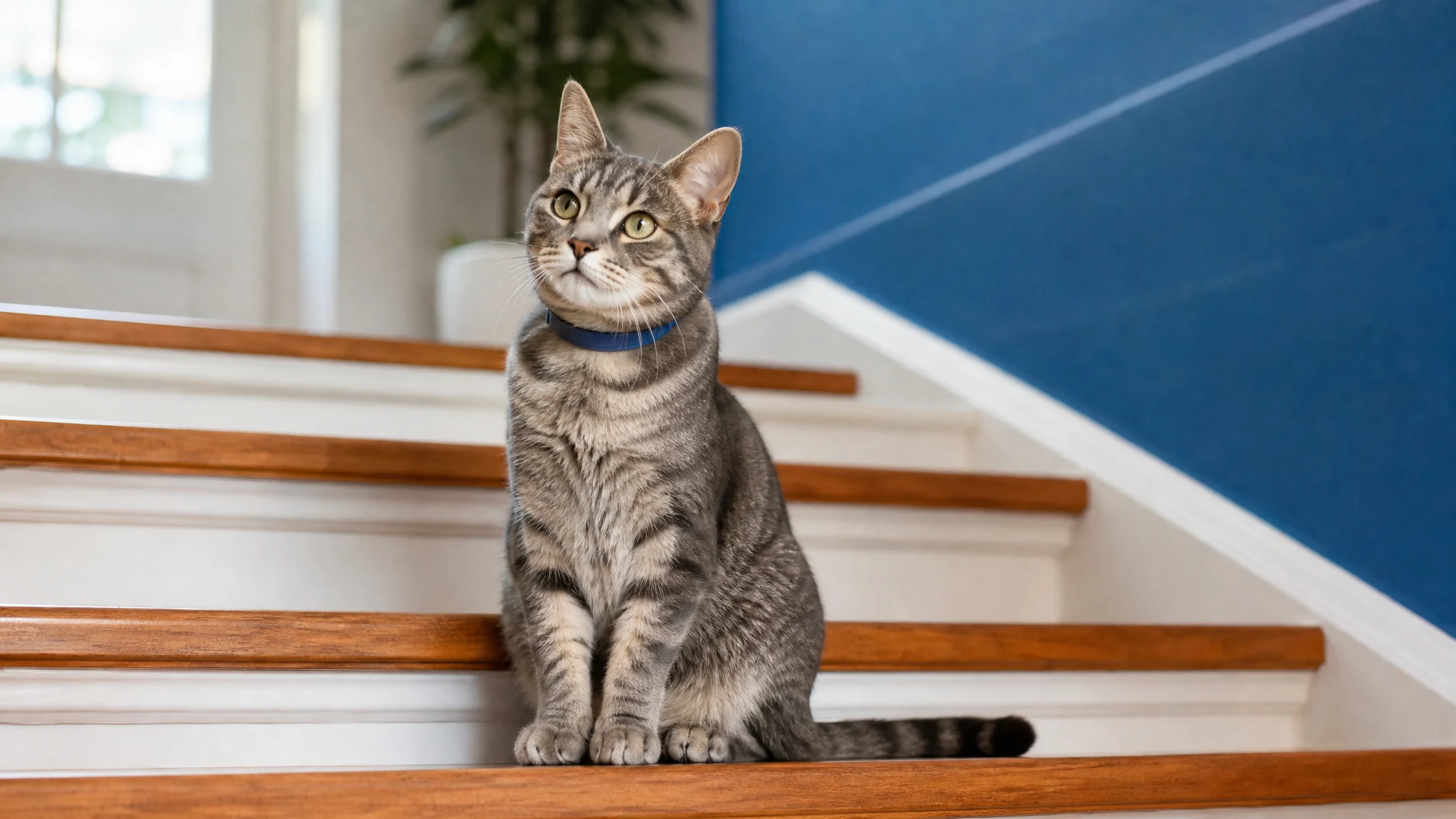
Emotional Support Cat Vest: Do You Need One?
Short answer: no. An emotional support cat vest is not a legal requirement in any U.S. state, and the housing protections that matter come from the Fair Housing Act (FHA) and a letter from a licensed mental health professional, not from anything your cat wears. Below, we answer the most common questions about the esa vest, the therapy cat vest, and what they can and cannot do for you and your cat.
Do You Legally Need a Vest?
Do I need an emotional support cat vest?
No. Neither federal law nor any state law requires an emotional support cat to wear a vest, cape, or tag. Your housing rights under the FHA depend on a letter from a licensed clinician, as described in HUD's FHEO-2020-01 notice.
Does an ESA vest give my cat legal rights?
No. A vest is clothing, not documentation, and it grants no rights on its own. A landlord evaluating a reasonable accommodation request looks at the letter, not at what your cat is wearing.
Can a landlord demand that my cat wear a vest?
Generally, HUD's guidance does not list a vest as something a housing provider may require. If a landlord insists on one, a legal aid office or an attorney licensed in your state can explain your options.
Is an esa vest the same as a service animal vest?
No, and the difference matters. Service animals, which under the ADA are dogs (and in limited cases miniature horses), are individually trained to perform tasks. Emotional support cats are not covered by the ADA's public-access rules, so a vest should never be used to suggest your cat is a service animal.
Vests, Letters, and Registration
What actually protects my housing rights?
A letter written by a licensed mental health professional (LMHP) who is licensed in the same state as you, such as an LCSW, LMHC, LMFT, psychologist, or psychiatrist. In some states, a licensed primary-care provider may also qualify. A licensed clinician will decide whether an ESA is therapeutically appropriate for you, and approval is never automatic.
Does my state have special rules for ESA letters?
Yes, and they vary. California, Montana, Arkansas, Iowa, and Louisiana require an established clinician relationship of at least 30 days before a letter can be issued. Florida Statute 760.27 requires a Florida-licensed clinician or one with a prior in-person relationship with you, so online-only, out-of-state providers cannot issue a valid Florida letter. Check the rules in your state before you begin.
Is registering my cat the same as getting a vest?
No. Registration is optional and is not a legal requirement, and housing rights under the FHA come only from a letter written by a licensed mental health professional. Registration is still useful for one reason: a lost-pet recovery database. For the full picture, read our guide on how to register your cat as an emotional support animal.
Can I show a landlord an ID card or registration number instead of a letter?
No. A landlord is not required to accept an ID card, certificate, or registration number in place of a letter from a licensed clinician. Be cautious of sites that sell a fake certificate for a few dollars and imply it carries legal weight, because it does not.
Therapy Cat Vests and Public Spaces
What is a therapy cat vest, and how is it different?
A therapy cat vest is typically worn by a cat that has been evaluated by a therapy-animal organization to visit hospitals, schools, or care facilities with its handler. An emotional support cat lives with one person to provide comfort at home. The two roles are different, and a vest for one does not turn the cat into the other.
Can I bring my emotional support cat into stores, restaurants, or workplaces?
Not as a matter of right. Emotional support animals do not have public-access protections under the ADA, so a business can set its own pet policy. Workplace requests are handled separately, and a state-licensed attorney or an employment specialist can advise you.
What about flying with my emotional support cat?
Since the Department of Transportation's 2021 change, ESAs are no longer covered by the Air Carrier Access Act, and airlines treat them as ordinary pets. A vest will not change that. Check your airline's pet policy and fees well before you travel.
Do any states penalize misrepresenting a pet as an assistance animal?
Many states have laws against misrepresenting an animal as a service or assistance animal, with penalties that vary. Using a vest to imply more legal status than your cat has can create problems. If you are unsure how this works where you live, a licensed attorney in your state can answer it.
Choosing and Using a Vest Anyway
Is there any reason to buy a vest?
Some owners like one as a courtesy signal in a shared building, at a vet visit, or on a quiet outdoor walk. It can also tell neighbors that your cat is not a stray. Think of it as an optional accessory, not a credential.
How do I pick a safe vest or harness for a cat?
Choose a lightweight, breathable, escape-resistant design with adjustable straps, and check that you can fit two fingers under it. Cats can slip out of loose gear, so pair any vest with a secure harness and a leash outdoors. Skip anything heavy, scratchy, or restrictive.
How do I get my cat used to wearing one?
Go slowly. Let your cat sniff the vest, then wear it for a minute or two with treats, and build up over several days. If your cat freezes, flattens its ears, or tries to hide, take it off and try again later, because comfort comes first.
Should my cat wear a vest all day?
No. Take it off at home so your cat can groom, rest, and move freely without snagging. Gear left on unsupervised is a safety risk.
What should my cat wear for lost-pet protection?
A breakaway collar with an ID tag, plus a microchip registered with current contact details, is the most reliable protection. A lost-pet recovery database can add another layer if your cat ever slips out. A vest helps less here, since it can come off.
Next Steps
How do I find out whether an ESA may be right for me?
Talk with a licensed mental health professional in your state. Many people living with anxiety, depression, or other conditions find a companion cat helpful, but only a clinician can determine whether an ESA is appropriate for you. Review your state's specific rules before you begin.
Important Disclaimer
This page is informational content only. It is not medical, mental-health, or legal advice. Please consult a clinician licensed in your state about whether an emotional support animal is right for you, and consult an attorney licensed in your state, or your local legal aid office, for any landlord dispute. ESA rules differ across U.S. states, so review your state's requirements before you act.
Ready to start your ESA letter?
Licensed clinician review. Compliant with state law.
Get My ESA Cat Letter