Apartment Living With an Emotional Support Cat: Space, Litter, Noise and Neighbours
An emotional support cat apartment setup is mostly about small, repeatable habits: where the litter box sits, how you handle evening noise, and how you talk to the people on the other side of the wall. Cats suit apartments well, and a well-organised indoor cat apartment routine keeps you, your cat and your neighbours comfortable. This guide walks through that routine step by step, and is honest about what the law does and does not require of you.
One framing point first. Under the federal Fair Housing Act, a tenant with a disability-related need may request a reasonable accommodation for an emotional support animal, even in a building with a no-pets policy. HUD explains how housing providers should assess those requests in its notice FHEO-2020-01, "Assessing a Person's Request to Have an Animal as a Reasonable Accommodation Under the Fair Housing Act." That accommodation does not excuse damage, nuisance or neglect, and a calm, tidy cat is the best evidence that your arrangement works for everyone. For the rights side in detail, see our guide to emotional support cats and landlords.
What You Will Need
You do not need much, but a few items do most of the work:
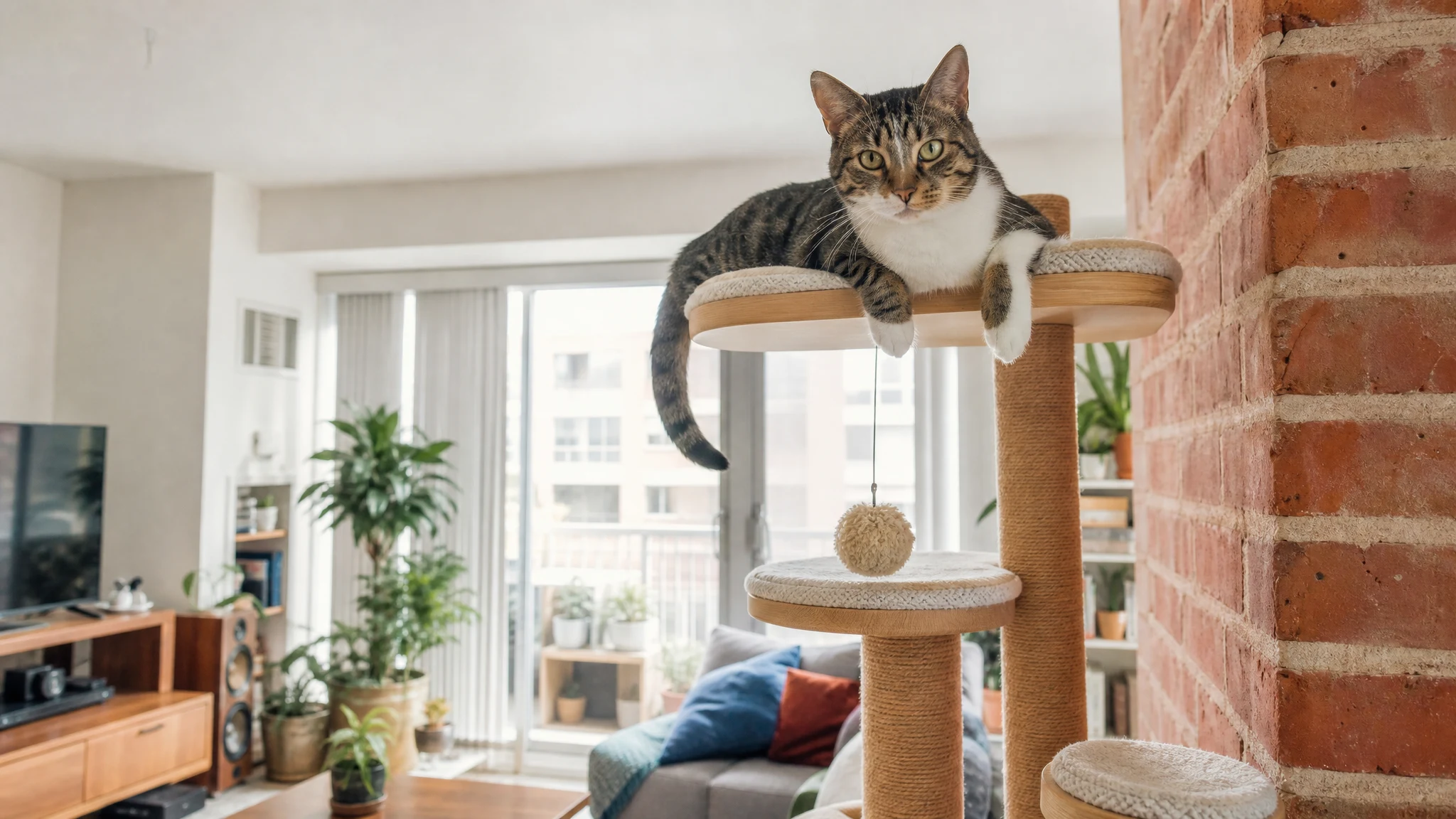
- A vertical climbing structure, such as a cat tree or wall shelves, so your cat can use height instead of floor space.
- One litter box per cat, plus one spare if space allows, in a size roughly one and a half times your cat's body length.
- Unscented, low-dust clumping litter, a scoop, lidded waste bin and a washable mat.
- Two or three scratching surfaces, one vertical and one horizontal.
- Window perch or secured window screens for safe sightlines and fresh air.
- Puzzle feeders and a few quiet toys for daytime enrichment.
- Rugs or rubber furniture pads to dampen the sound of landing paws.
- Enzymatic cleaner for accidents.
- Your lease and any written pet or assistance-animal policy.
- Your ESA letter, if you have one, kept somewhere easy to find.
Step 1: Read Your Lease and Know Where You Stand
Before rearranging a single shelf, read your lease and any building rules on animals. Note pet deposits, pet rent, breed or weight rules and noise clauses. Under the Fair Housing Act, a housing provider generally may not charge pet fees or pet rent for an assistance animal that has been approved as a reasonable accommodation, but you remain responsible for actual damage your cat causes, as you would be for any other damage.
The documentation a housing provider may ask for is a letter from a licensed mental health professional (LMHP) who is licensed in your state and has evaluated you. That is typically an LCSW, LMHC, LMFT, psychologist, psychiatrist or, where state law permits, a licensed primary-care provider. A licensed clinician will determine whether an emotional support animal is therapeutically appropriate for you; approval is never automatic. If you are still at that stage, our walkthrough on registering your cat as an emotional support animal explains the process and what to expect.
State rules that affect timing
Several states add requirements on top of federal law, so check your own state's rules before you plan around a move-in date:
- Florida: Florida Statute 760.27 requires the clinician to be licensed in Florida or to have an established prior in-person relationship with you. An online-only provider licensed elsewhere cannot issue a valid Florida letter.
- California, Montana, Arkansas, Iowa and Louisiana: state law requires a minimum 30-day established clinician relationship before a letter can be issued. This is a consumer protection feature, so plan ahead rather than expecting a rushed turnaround.
Step 2: Be Honest About the Registration Question
You will see websites selling registrations, ID cards and certificates for cats. To be plain: registration is not a legal requirement, and your housing rights under the Fair Housing Act come only from a letter written by a licensed mental health professional. A landlord is not required to accept a registration number or ID card in place of that letter, and no cat is "certified" in any legal sense.
Where optional registration does help is practical. A registry with a lost-pet recovery database means that if your cat slips out of the door during a delivery, a finder can look up your contact details quickly. That is the benefit worth caring about in an apartment, where hallways, stairwells and propped doors create real escape risk. Be wary of generic services charging a small fee for a certificate that promises rights it cannot give.
Step 3: Design the Space Vertically
Apartments run out of floor before they run out of wall. Cats do not mind: they value height, vantage points and hiding spots more than square footage.
- Create three zones: a rest zone (a bed or covered nook), an activity zone (tree, shelves, scratching post) and a service zone (food, water, litter).
- Add height first. A tall tree in a corner or a set of wall-mounted steps (check your lease before drilling) adds usable territory without eating floor space.
- Give a window view. A perch gives your cat something to watch, which many indoor cats find enriching.
- Keep food and litter apart. Cats generally dislike eating near their toilet; even a few metres and a doorway make a difference.
- Provide a retreat. A covered bed on a high shelf lets a shy cat withdraw when guests visit.
Step 4: Set Up Litter So It Never Becomes an Issue
Smell is the number-one complaint neighbours raise, and it is almost entirely preventable.
- Choose the location carefully. A bathroom or a quiet hallway nook works well. Avoid placing the box against a shared wall in a bedroom, where sound and scent travel.
- Scoop at least once daily, ideally twice. Clumps left overnight are what you smell.
- Seal waste. Use a lidded bin or tie waste in a bag before it goes to the building's rubbish area, rather than leaving open bags by your door.
- Do a full change on a schedule. Empty, wash with mild unscented soap and refill every week or two, depending on litter type and the number of cats.
- Use a mat. A textured mat catches tracked litter before it reaches the hallway on your shoes.
- Respond to changes. If your cat suddenly avoids the box or strains, call your veterinarian, since sudden litter changes can signal a health problem.
Step 5: Manage Noise Before It Becomes a Complaint
Cats are quiet compared with many pets, but apartments amplify small sounds. The usual culprits are night-time zoomies, scratching, and early-morning vocalising.
- Burn energy in the evening. Two short play sessions with a wand toy, finishing with a small meal, tend to settle many cats for the night.
- Cushion the landings. Place rugs beneath the cat tree and at the base of any jump route, especially if you have neighbours below.
- Redirect scratching. Put a sturdy post next to the spot your cat favours, and reward use.
- Address vocalising. Rule out medical causes with your vet, then use feeding routines and enrichment. Do not scold; it rarely helps.
- Think about which wall is shared. Place noisy toys and the tree away from the party wall.
Step 6: Be a Good Neighbour
You are not required to announce your cat to the whole floor, but a friendly, low-key approach prevents most disputes before they start.
- Introduce yourself. A brief hello and a number to reach you tells neighbours you are approachable.
- Keep your cat inside. A strictly indoor cat apartment lifestyle avoids hallway encounters, allergy complaints and escape risk.
- Use a carrier in shared spaces. Any trip to the vet should be in a secure carrier through lobbies and lifts.
- Mind doors. Block the entrance with a gate or a small foyer routine, so your cat cannot bolt when you open the door.
- Ask and listen. If someone mentions noise or smell, thank them, check the cause and fix it promptly.
- Keep records. Save vet visit receipts, and keep up with vaccinations, since a documented, healthy cat is easier to defend if anyone raises a concern.
A Note on Texas and Other States
Readers often ask how an emotional support animal Texas apartment arrangement differs from elsewhere. In general, tenants in Texas rely on the federal Fair Housing Act together with the Texas Fair Housing Act (Texas Property Code Chapter 301), which parallels the federal law on disability accommodations. Texas is not among the states with a mandatory 30-day clinician relationship, but a letter still needs to come from a licensed professional who has genuinely evaluated you. Rules change, so check the current requirements for your state and consult a licensed attorney in your state about specific questions. For a landlord dispute, a local legal aid office or housing authority may also be able to point you to the right agency.
Tips and Common Mistakes to Avoid
Helpful tips
- Rotate toys weekly so interest stays high without buying more.
- Use a microchip and a breakaway collar with an ID tag; both support recovery if your cat ever gets out.
- Keep nails trimmed to protect floors and furniture, and to reduce scratching noise.
- Keep a copy of your letter on your phone and in a folder for easy access.
Common mistakes
- Assuming a registration or ID card replaces a letter. It does not.
- Hiding the cat from management. Concealment can create lease problems. Communicate in writing instead.
- Placing the litter box in a closet with no airflow. This concentrates odour and discourages use.
- Skipping enrichment. Bored cats become noisy and destructive.
- Relying on a letter from a service that skips an evaluation. A valid letter comes from a licensed clinician, not a form.
- Expecting travel rights. Since the DOT's 2021 rule change, airlines treat emotional support animals as ordinary pets, so an ESA letter does not provide air-travel protections.
What to Expect
With these habits in place, many owners find that an indoor cat settles into apartment life within a few weeks, using the space calmly and keeping noise and odour at levels neighbours barely notice. Many people with anxiety, depression or related conditions report that the routine of caring for a cat, along with its quiet company, feels supportive, though a licensed clinician will determine whether an emotional support animal is appropriate for you, and results vary from person to person. A well-managed home also makes any future conversation with a housing provider straightforward.
Frequently Asked Questions
Can my landlord refuse my emotional support cat?
Under the Fair Housing Act and HUD notice FHEO-2020-01, a housing provider generally must consider a reasonable accommodation request supported by reliable documentation, though there are limited exceptions, such as a cat that poses a direct threat or would cause substantial damage. Ask a licensed attorney in your state about your specific situation.
Do I need to register my cat?
No. Registration is optional and carries no legal weight for housing. Its practical value is a lost-pet recovery database and an ID card for your own records.
How many litter boxes do I need in a small apartment?
A common guideline is one box per cat plus one extra. In a studio, two boxes placed in different spots usually work better than one oversized box.
Important Disclaimer
This article is informational content only. It is not medical, mental-health or legal advice. Whether an emotional support animal is appropriate for you is a decision for a licensed mental health professional licensed in your state, and housing rules vary by state and by situation. For a housing dispute, consult an attorney licensed in your state or your local legal aid office. Review your state's specific rules before acting.
Ready to start your ESA letter?
Licensed clinician review. Compliant with state law.
Get My ESA Cat Letter