Therapy Cats: What They Are and How a Cat Becomes One
Many cat owners ask whether their calm, affectionate companion could become a therapy cat, and whether that is the same thing as an emotional support cat. It is not, and the difference matters for your cat's welfare and for your legal footing. This deep-dive covers what a therapy cat is, what the research suggests about why cats may be soothing, the usual therapy cat requirements and training steps, the safety considerations, and how to judge the organizations that evaluate teams. It also explains where the Fair Housing Act fits in, because that is the point on which owners are most often misinformed.
A note on format: this piece is a science-focused deep-dive, but a therapy cat is not a substance, so there is no chemical composition to examine. We apply the same lens instead to the biology of the human-cat bond, the evidence, the safety profile, and the quality indicators to look for in a program.
What Is a Therapy Cat?
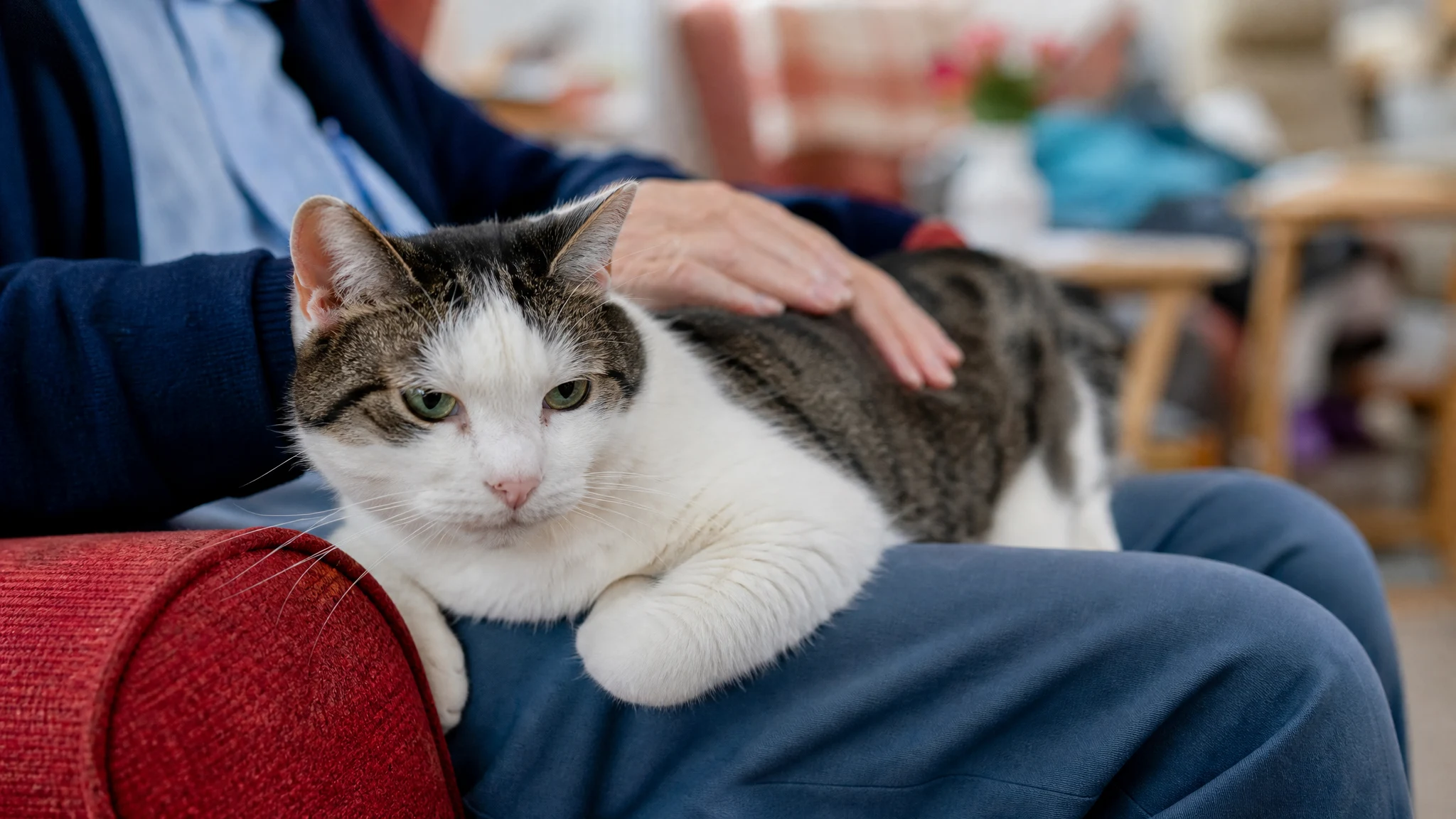
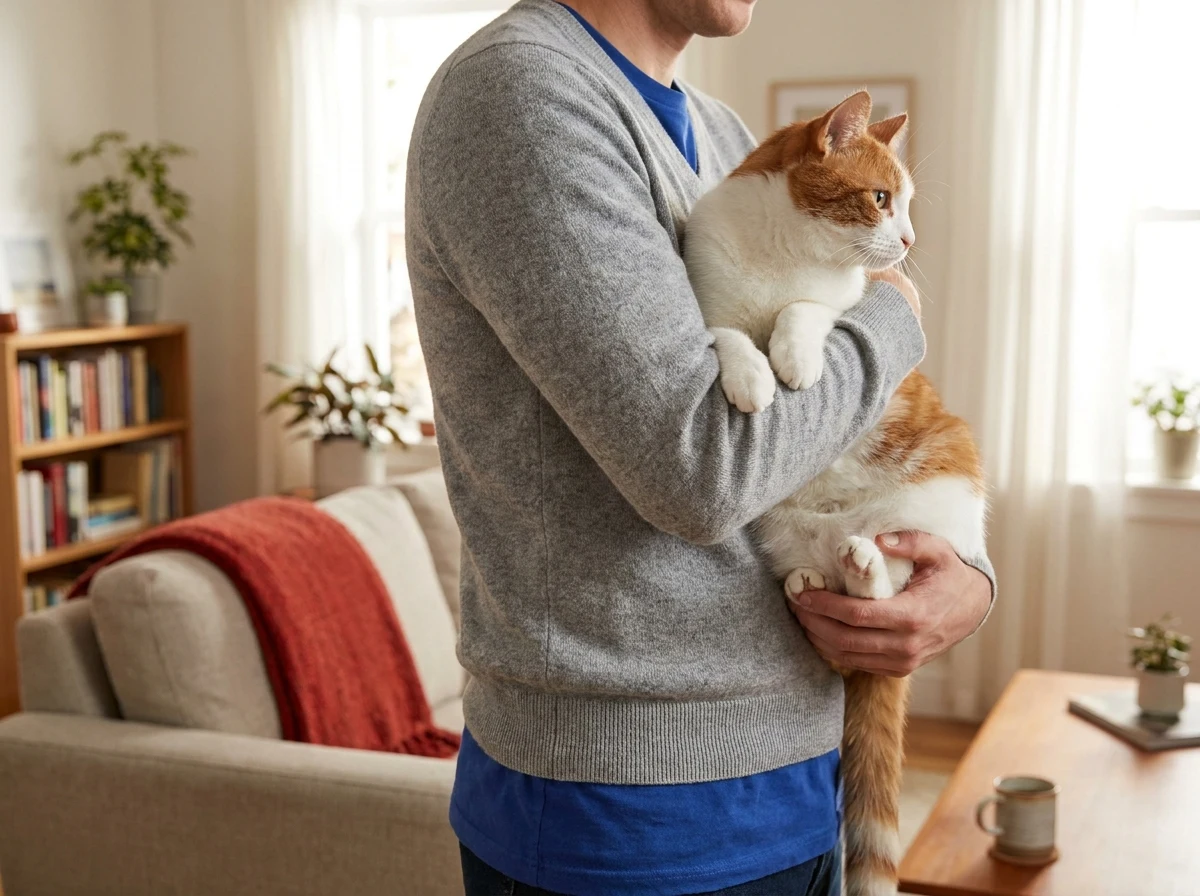
A therapy cat is a cat that, together with its owner or handler, visits settings such as hospitals, nursing homes, schools, libraries and hospices to offer comfort to other people. The animal serves the public, not one individual. Teams usually volunteer, and most programs require an evaluation and registration with a therapy-animal organization before visits begin.
Three terms are often blurred, so it helps to separate them:
- Therapy cat: visits facilities to comfort many people. It generally has no special access rights; each facility decides whether to admit it.
- Emotional support cat (ESA): lives with one person and may help that person's mental health. Its housing protections come from the Fair Housing Act and a letter from a licensed mental health professional (LMHP), not from a therapy certification.
- Service animal: under the Americans with Disabilities Act, a dog (or in limited cases a miniature horse) individually trained to perform tasks for a person with a disability. Cats do not qualify as service animals under the ADA.
So a therapy cat credential does not turn a cat into an ESA, and an ESA letter does not make a cat a therapy cat. Some cats do both jobs, but each role has its own requirements.
What Research Suggests About Why Cats May Be Calming
The scientific literature on cats is smaller than on dogs, and most of it is observational. The findings below are best read as interesting observations, not established proof.
Purring and low-frequency sound
Bioacoustics work, including Elizabeth von Muggenthaler's 2001 conference paper on feline vocalization, reported that domestic cat purring falls largely in a low-frequency range of roughly 25 to 150 Hz. Researchers have speculated that vibration in this range may play a role in the cat's own tissue healing, and some have wondered whether it also contributes to a calming effect on nearby people. That second idea has not been rigorously tested in humans, so it remains a hypothesis. Many owners simply report that a purring cat nearby feels soothing, and that is a reasonable lived observation to hold alongside the science.
Heart health observations
A 2009 analysis by Qureshi and colleagues, published in the Journal of Vascular and Interventional Neurology and drawing on a long-running U.S. health survey, observed that people who had owned cats had a lower rate of death from heart attack than people who had never owned one. The study was observational. It cannot show that cats caused the difference, since owners and non-owners differ in many ways. Research suggests an association worth studying further, nothing more.
The wider human-animal interaction literature
Studies of human-animal interaction, mostly involving dogs, have observed short-term changes in stress markers such as cortisol and in reported mood after brief contact with a friendly animal. Evidence specific to cats is thinner, and results vary with study design, participant group and the individual animal. A fair summary is that many people report feeling calmer around a comfortable, friendly cat, that the research is still developing, and that a licensed clinician is the right person to judge whether an animal is therapeutically appropriate for any individual.

Therapy Cat Requirements
Requirements differ among organizations, so check the current rules of the group you plan to join. The common ones look like this:
- Age and time with the handler. Larger national groups typically ask that the cat be at least about a year old and have lived with its handler for a set period (often several months), so that the team has a track record. Confirm exact figures with the organization.
- Veterinary health. Expect to provide proof of vaccinations, a recent exam, and parasite control. Many programs also ask for a clean bill of health before each renewal.
- A temperament evaluation. An evaluator watches how the cat reacts to strangers, sudden noises, medical equipment, wheelchairs and walkers, handling by several people, and being restrained gently. A cat that hides, lashes out or panics is not a candidate, and that is a welfare decision, not a failure.
- Handler training. The person at the other end of the leash matters as much as the cat. Programs usually require handlers to complete a course or workshop covering infection control, reading feline stress signals, and facility etiquette.
- Insurance and registration. Many organizations enroll teams and provide liability coverage. Facilities frequently ask to see current credentials.
- Re-evaluation. Teams are generally re-assessed every one to two years.
Note that cats are less common than dogs in this field, and some local programs or facilities do not accept them. Ask first.
How to Train a Therapy Cat
Therapy cat training is mostly about building tolerance and confidence, not teaching tricks. No training can create a calm temperament where none exists, but it can sharpen one that is already there. A practical progression:
1. Start with comfort and trust
Use reward-based methods only: treats, gentle praise and play. Punishment tends to raise stress and erodes the trust you need.
2. Teach harness and leash
Most facilities require a cat to be secured. Introduce a well-fitted harness indoors for a few minutes at a time, pairing it with treats, before moving to short supervised walks and carrier trips.
3. Desensitize to handling
Practice being touched on the paws, ears, tail and belly, being held in different positions, and being petted by different people. Keep sessions short and stop while the cat is still relaxed.
4. Add sounds, surfaces and equipment
Gradually expose your cat to rolling carts, walkers, wheelchairs, beeping monitors, slick floors and crowded rooms, starting at low intensity and rewarding calm behavior.
5. Build basic cues
Reliable responses to a name call, a settle on a mat or lap, and a gentle release from being held make visits smoother and safer for everyone.
6. Practice mock visits
Visit pet-friendly stores, quiet public spaces or a friend's home. Watch your cat's body language, including flattened ears, a lashing tail, dilated pupils and tucked posture, and end the session early if you see stress. A cat that enjoys the work will seek contact; a cat that merely tolerates it will tell you when it has had enough.
Safety Profile and Contraindications
Therapy visits carry real, manageable risks. Responsible teams plan for them.
- Cat welfare. Cats are territorial and sensitive to change, and many find travel and crowds stressful. Visits should be short, with water, a quiet retreat and a firm rule that the cat can stop at any time. A cat showing persistent stress should be retired, not coaxed.
- Allergies. Cat dander is a common allergen. Facilities typically screen for patients with allergies or asthma, and handlers should groom the cat before each visit.
- Infection control. Immunocompromised patients, open wounds and some hospital units may be off limits. Hand hygiene before and after contact is standard practice. Bites, scratches and zoonotic infections such as Bartonella (cat scratch disease), ringworm and some parasites are the reason vaccination, flea control, nail care and veterinary oversight are required.
- Raw diets. Many programs prohibit or restrict raw meat diets in visiting animals because of pathogen shedding. Ask your organization.
- Handler wellbeing. Visiting people in hospitals and hospices can be emotionally demanding. Handlers should be supported too.
Contraindications for the cat include age or illness that makes travel hard, a history of aggression, fearfulness, and conditions that require frequent medication changes. Your veterinarian is the right person to advise on your particular cat.
Sourcing and Quality Indicators: Choosing an Organization
Because no single federal body licenses therapy animals, quality varies. A reputable program usually has these features:
- A published, in-person temperament evaluation by a trained evaluator, not an instant online "certificate"
- Required handler education and a veterinary health screening
- Liability coverage and periodic re-evaluation
- A clear code of conduct that protects the animal's welfare
- Facility partnerships you can verify
Be cautious about fly-by-night websites that sell a cheap "therapy cat certification" or vest after a few clicks and no evaluation. Those documents carry no weight with facilities that know the field, and they do nothing for your cat.
Therapy Cat vs. Emotional Support Cat: Housing Rules in Every U.S. State
If your real goal is to live with your cat in rental housing that has a no-pets policy, therapy certification is the wrong tool. Housing rights for an emotional support animal come from the federal Fair Housing Act, as described in HUD's notice FHEO-2020-01, Assessing a Person's Request to Have an Animal as a Reasonable Accommodation Under the Fair Housing Act. Under that framework, a housing provider evaluates a request for an assistance animal when the person has a disability-related need, and it commonly looks to reliable documentation from a licensed health professional. A therapy credential, a vest or an ID card does not substitute for that documentation.
The letter must come from a licensed mental health professional, such as an LCSW, LMHC, LMFT, psychologist, psychiatrist, or in some states a licensed primary-care provider, who is licensed in the same state as the client. A licensed clinician will determine whether an emotional support animal is therapeutically appropriate; many people with anxiety, depression or other conditions find an ESA helpful, but approval is never automatic.
State rules add detail, so check yours:
| State | What to know |
|---|---|
| California (AB-468), Montana (HB-703), Arkansas, Iowa, Louisiana | State law requires a minimum 30-day established clinician-client relationship before an ESA letter can be issued. This is a feature of compliance with state law, and no one can honestly offer a faster path. |
| Florida | Florida Statute 760.27 requires the clinician to be licensed in Florida or to have an established prior in-person relationship with the client. Online-only out-of-state providers cannot issue a valid Florida ESA letter. |
| All other states | The federal Fair Housing Act framework applies. A letter from a clinician licensed in your state is the standard documentation; rules continue to change, so confirm current requirements. |
About registration and ID cards
Registering a cat is not a legal requirement, and registration does not grant housing rights. Those come only from a letter written by a licensed mental health professional. A landlord is not obliged to accept a registration number or ID card in place of that letter, and no cat should be called "certified" as a legal status. If you do choose optional registration, its practical benefit is a lost-pet recovery database that can help reunite you with a cat that slips out, along with a lifetime listing, ID card and a discount on an ESA letter. For a step-by-step look at the legitimate process, see our guide on how to register your cat as an emotional support animal.
Travel
Neither an ESA letter nor a therapy credential gives air-travel rights. In 2021 the Department of Transportation removed emotional support animals from the Air Carrier Access Act, and airlines now treat them as ordinary pets, subject to each airline's pet policy and fees. Those who need an animal for travel because of a disability may wish to ask a clinician about a psychiatric service dog.
Is Your Cat Suited to Therapy Work?
Ask honestly: does your cat seek out strangers, tolerate handling, stay relaxed in new places and recover quickly from surprises? If so, a local therapy-animal organization may be a rewarding path. If your cat is a homebody who is most content in familiar surroundings, that is equally valuable: a cat who provides companionship to you at home may be a good fit for an emotional support role, which asks nothing of the cat except being itself. Either way, the cat's comfort comes first.
Key Takeaways
- A therapy cat comforts many people in public settings; an emotional support cat helps one person at home. They are different roles with different rules.
- Research on purring, cat ownership and stress is promising but largely observational. Treat it as suggestive, not proven.
- Therapy cat requirements typically include age, time with the handler, veterinary records, a temperament evaluation and handler training.
- Therapy cat training is gradual, reward-based and guided by the cat's body language.
- Housing protection for an ESA comes from HUD's FHEO-2020-01 guidance and a letter from a licensed clinician in your state, not from therapy credentials, registration or ID cards.
Disclaimer: This article is informational content only. It is not medical, mental-health or legal advice. Please consult a qualified mental health professional licensed in your state to discuss whether an emotional support animal may be appropriate for you, review your state's specific rules, and, for any housing dispute, consult an attorney licensed in your state or your local legal aid office, which can help with Fair Housing Act enforcement. Consult your veterinarian about your cat's suitability for therapy work.
Ready to start your ESA letter?
Licensed clinician review. Compliant with state law.
Get My ESA Cat Letter