Maine Coon Cats as Emotional Support Animals
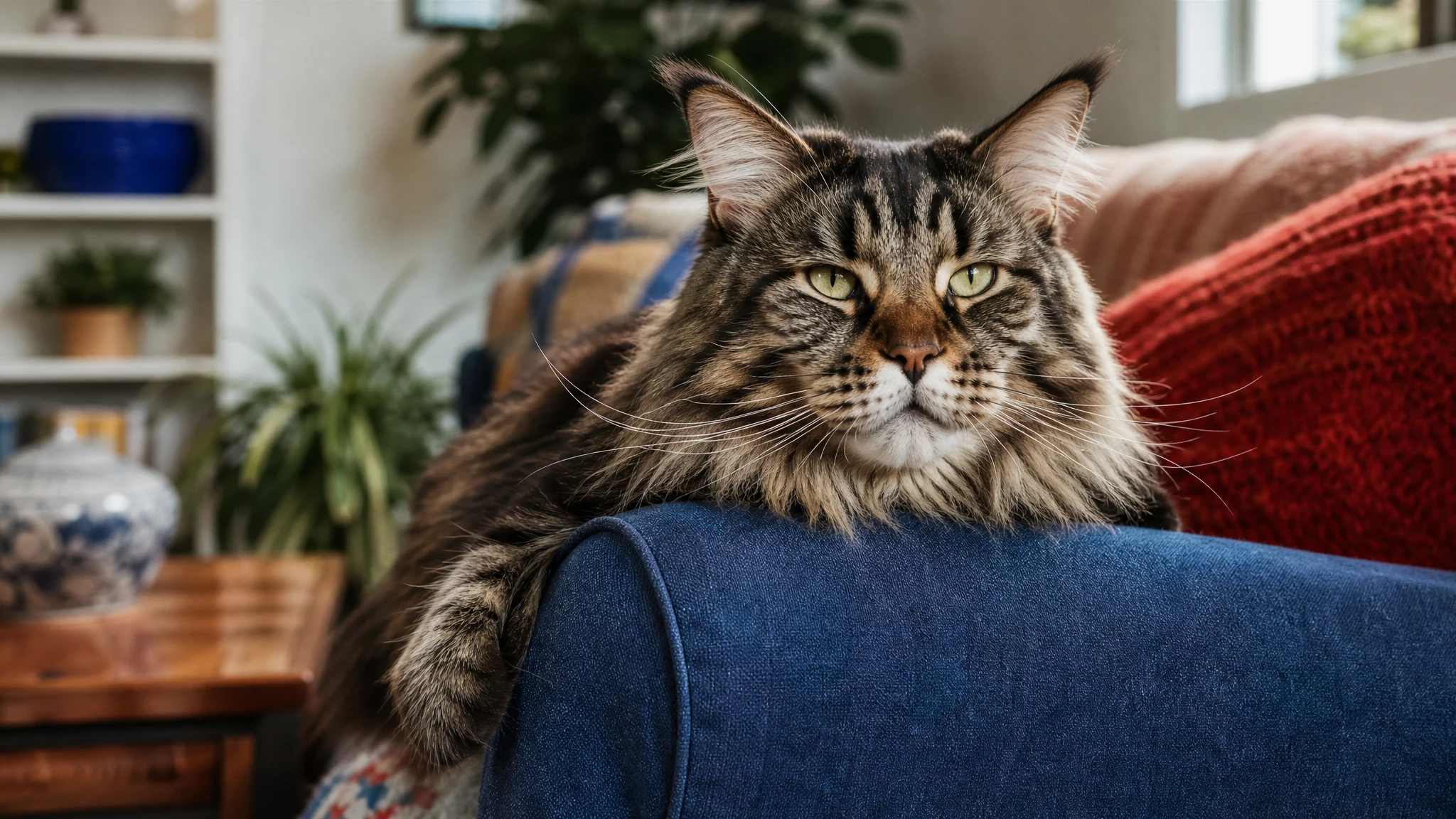
The Maine Coon is the breed people most often ask about when they start looking into a Maine Coon emotional support cat. It is large, sociable and famously dog-like in its attachment to its household. This article is a science-minded deep dive rather than a sales pitch. It covers what the breed's biology and temperament suggest about companionship, what research says about cats and human wellbeing, the health issues worth knowing about, and how to choose a healthy cat from a responsible source. It also covers what the law does and does not require, because that is where many owners get misled.
Our usual 'ingredient' format does not map neatly onto a living animal, so we have adapted it. 'Composition' here means the traits that make up the breed. 'Safety profile' means health and household considerations. 'Sourcing' means how to find a well-bred, well-socialized cat.
Why the Maine Coon comes up so often among emotional support cat breeds
When owners compare emotional support cat breeds, a few names recur: Ragdoll, Birman, Burmese, Siamese, Scottish Fold and Maine Coon. Two points before we go further. First, no breed is required, recommended or prohibited by any federal ESA rule. An emotional support animal's legal significance comes from an individual's relationship with a licensed clinician, not from the animal's pedigree. Second, individual temperament varies widely within every breed, and a well-socialized rescue tabby can be just as steady a companion as a purebred.
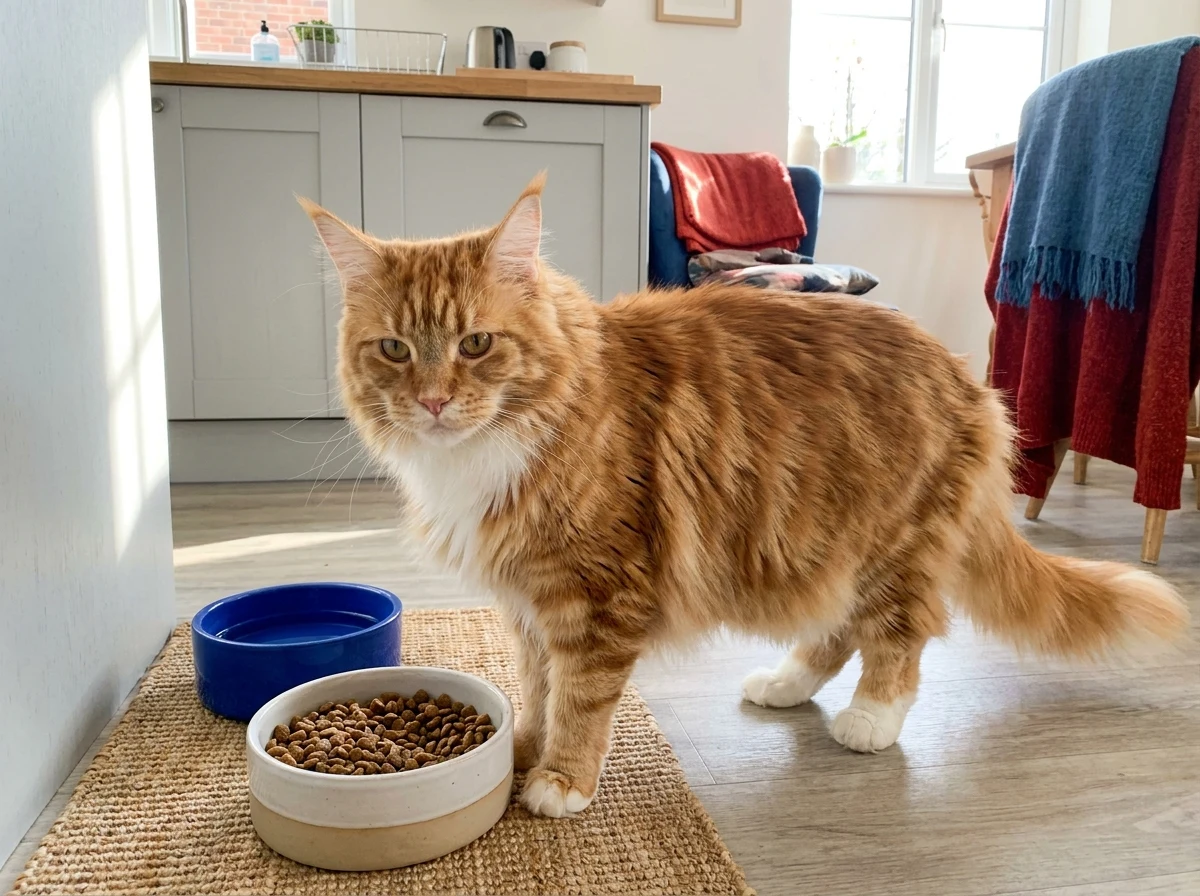
With that said, the Maine Coon's reputation is well earned among breeders and owners. The breed is often described as gentle, curious and people-oriented, following its owner from room to room and communicating in soft chirps and trills rather than loud meows. Whether that makes a particular cat therapeutically helpful for a particular person is a question for that person and their clinician.
The breed's 'composition': traits that shape companionship
Size and physical presence
Maine Coons are among the largest domestic cat breeds. Adult males commonly weigh roughly 13 to 18 pounds and females somewhat less, though healthy individuals vary. The breed matures slowly, often not reaching full size until three to five years of age. Some owners find a heavy, warm cat that settles on a lap especially comforting. Others find the weight awkward. Neither response is a clinical finding, only a practical consideration.
Coat and grooming
The Maine Coon has a dense, water-resistant, shaggy double coat that is longer on the ruff, belly and britches. It needs regular combing, typically several times a week, to prevent mats. Many owners find that a grooming routine becomes a calming, predictable bonding ritual. Daily routine is a factor clinicians often consider when discussing the role an animal plays in someone's life.
Temperament and social behavior
Cat behavior researchers have noted that individual cats differ in sociability and that early handling shapes adult behavior. Kittens handled gently by several people in their first weeks of life tend to grow into more confident adults. Maine Coons are generally reported to tolerate handling, children and other pets well. They are also intelligent, and many owners report that their cats learn routines, play fetch or respond to their names. As always, these are observations from owners and breeders, not guarantees.
Purring and sound
Domestic cats purr at a frequency generally reported in the range of 25 to 150 Hz. Some bioacoustics researchers have speculated that vibrations in this range may be associated with tissue and bone healing in cats themselves. Evidence that purring benefits humans is far weaker. Research suggests that the rhythmic, predictable sound of a purring cat is something many people find soothing, but we would not call it a treatment.
What research suggests about cats and wellbeing
The research base for emotional support animals is real but modest, and it is worth being candid about its limits. Here is what the literature suggests, framed as observations.
- Human-animal interaction and stress. Reviews of animal-assisted interventions, including a widely cited 2010 review by Herron and Buffington, suggest that interacting with companion animals may be associated with lower self-reported stress and anxiety for some people. The studies vary in quality and many are small.
- Cat ownership and cardiovascular health. A long-term observational study from the University of Minnesota (Qureshi and colleagues, 2009) reported that people who had never owned a cat had a higher risk of dying from heart attack than current or former owners. Observational studies cannot establish cause, and the authors cautioned against over-reading the result.
- Attachment to cats. Studies of cat-owner bonds suggest that many cats form real attachments to their caregivers, and that many owners rate their cats as important sources of emotional support. This is self-reported data.
- Loneliness and routine. Researchers studying pet ownership during isolation periods have reported that many owners felt their pets helped them cope, while also noting that the findings are mixed and depend on the person.
Taken together, research suggests a plausible benefit for some people, not a proven effect for everyone. A licensed clinician is the person to determine whether an emotional support animal is therapeutically appropriate for you.
Safety profile: health conditions and household considerations
Genetic and breed-associated health issues
Responsible ownership starts with knowing the breed's known risks.
- Hypertrophic cardiomyopathy (HCM). Maine Coons are one of the breeds most associated with this heart condition. Veterinary cardiologists identified a mutation in the MYBPC3 gene (the A31P variant) in the breed in the mid-2000s, and a genetic test exists. A negative test does not rule out HCM, since other causes exist, so ongoing veterinary screening, including echocardiograms, is commonly recommended.
- Spinal muscular atrophy (SMA). A separate inherited condition identified in the breed, also testable by DNA screening.
- Hip dysplasia. Reported more often in large breeds, including Maine Coons.
- Dental and weight management. Large cats benefit from regular dental care and a measured diet.
Your veterinarian is the right source for breed-specific screening advice.
Allergies
The main cat allergen, a protein called Fel d 1, is produced by all cats. No breed is truly hypoallergenic, and a long-haired Maine Coon sheds. If anyone in your household has asthma or cat allergies, spend time with the individual cat before committing, and discuss it with a physician.
Practical contraindications
- Lifespan and cost. Maine Coons commonly live around 12 to 15 years. Food, grooming, litter and veterinary care for a large cat cost more than for a small one, so budget accordingly.
- Space. A large cat needs a sturdy tree, an extra-large litter box and room to climb. A small apartment can work, but plan for it.
- Mismatch with your needs. A very social, vocal cat may not suit someone who needs a quiet home. A clinician can help you think this through.
Sourcing and quality indicators
If you are adopting or buying a Maine Coon, these indicators help separate responsible sources from the rest.
- Health testing documentation. A responsible breeder can show HCM (MYBPC3) and SMA test results for the parents, and veterinary cardiac screening records.
- Early socialization. Kittens should be raised in a home, handled daily and exposed to normal household noise. Kittens should not go home before about 12 weeks.
- Open facilities. You should be able to meet the mother cat and see where the kittens live. Be wary of any seller who insists on meeting in a parking lot or shipping a kitten unseen.
- A written health guarantee and return policy. Reputable breeders typically offer both and will take a cat back at any age.
- Rescue and breed-specific adoption groups. Many adult Maine Coons and Maine Coon mixes are available through rescues, often already temperament-tested. An adult cat's personality is also easier to judge than a kitten's.
What the law does and does not say
This is where many owners are misinformed, so it is worth being direct.
- The letter is what matters. Under the federal Fair Housing Act, a person with a disability-related need may request a reasonable accommodation for an assistance or emotional support animal. HUD's notice FHEO-2020-01, 'Assessing a Person's Request to Have an Animal as a Reasonable Accommodation Under the Fair Housing Act,' is the federal guidance on how housing providers should evaluate such requests. Reliable documentation comes from a licensed mental health professional (for example an LCSW, LMHC, LMFT, psychologist or psychiatrist, or a licensed primary-care provider where state law permits) who is licensed in the same state as the client.
- Breed and size are not the test. HUD's guidance directs housing providers to evaluate the request individually, and a breed or weight limit that would apply to ordinary pets does not by itself decide a request. A housing provider may still decline if the specific animal poses a direct threat or would cause substantial damage that cannot be reduced by other means. A calm Maine Coon is rarely in that situation, but each request is assessed on its facts.
- Registration is optional. Registering your cat, or buying an ID card or certificate, is not a legal requirement, and it does not create housing rights. A landlord is not required to accept a registry number or ID card in place of a letter. If you choose to register, the real benefits are practical: a lost-pet recovery database, which matters for an adventurous large cat, an ID card for your own records, and, with some services, a discount on the letter. Be wary of any site that sells a '$40 certificate' and implies it carries legal weight.
- No air-travel rights. The Department of Transportation removed emotional support animals from the Air Carrier Access Act in 2021. Airlines now treat ESAs as ordinary pets, so airline pet policies, fees and carrier-size rules apply to a Maine Coon, and a large cat can be a challenge in a cabin carrier.
State-specific rules to know
The federal framework applies in every state, but several states add requirements for how the clinician relationship works.
- Florida: Florida Statute 760.27 requires the clinician to be licensed in Florida or to have an established prior in-person relationship with the client. An online-only provider licensed elsewhere cannot issue a valid Florida letter.
- California, Montana, Arkansas, Iowa and Louisiana: state law requires a minimum 30-day established clinician-client relationship before an ESA letter can be issued. This protects the integrity of the process, so do not expect a faster turnaround in these states.
- Everywhere else: the clinician should be licensed in your state and should evaluate you individually.
State rules change, so check your own state's current requirements. If you are ready to take the next step, our walkthrough on how to register your cat as an emotional support animal explains the optional registration and the letter process in plain language.
Is a Maine Coon right for you?
A Maine Coon may suit someone who wants a sociable, affectionate cat and is comfortable with grooming, a larger food bill and a slow-maturing kitten. It may be a poorer fit if you need a low-maintenance, quiet or small-space companion. Many people find an adult rescue cat of any breed to be an equally good match. The best predictor of a good fit is how you and the individual cat get along, not the label on its pedigree.
Disclaimer
This article is informational content only. It is not medical, mental-health or legal advice, and it does not diagnose any condition or recommend that any person needs an emotional support animal. Whether an ESA is therapeutically appropriate is for a licensed clinician to determine after evaluating you individually. Please consult a mental health professional licensed in your state, and review your state's specific ESA rules. For landlord or housing disputes, consult an attorney licensed in your state, or contact your local legal aid office for help with Fair Housing Act enforcement. Discuss breed-specific health screening and your cat's care with a licensed veterinarian.
Ready to start your ESA letter?
Licensed clinician review. Compliant with state law.
Get My ESA Cat Letter