Flying With Your Cat After the 2021 ESA Rule Change
If you are asking whether you can fly with an emotional support cat, the short and honest answer is that you can fly with your cat, but not as an emotional support animal. Since the U.S. Department of Transportation (DOT) revised its Air Carrier Access Act (ACAA) regulations in 2021, airlines have been permitted to treat emotional support animals as ordinary pets. This guide takes the same careful, evidence-minded approach we would take with any ingredient list: it breaks the rule into its component parts, looks at what research suggests about cats and travel stress, and covers the safety and quality factors that matter before you book a seat.
This article is informational content only. It is not medical, mental-health, or legal advice. Please consult a licensed mental health professional in your state, a veterinarian for your cat's travel health, and, for housing disputes, an attorney licensed in your state.
The Rule at a Glance: What Actually Changed
Before 2021, many airlines accepted an emotional support animal in the cabin, often at no charge, when the passenger presented documentation from a mental health professional. The DOT's final rule on traveling by air with service animals, published in December 2020 and taking effect in January 2021 under 14 CFR Part 382, changed that framework in three key ways.
- A narrower definition of a service animal. Under the DOT's definition, a service animal is a dog individually trained to do work or perform tasks for a person with a disability, including a psychiatric, intellectual, or other mental disability.
- Emotional support animals no longer qualify. An emotional support animal, whatever the species, is not a service animal for air travel under the ACAA.
- Airlines set their own pet rules. An emotional support cat is now handled under the airline's ordinary pet policy, including its fees, carrier requirements, and cabin or cargo limits.
Because the DOT's service animal definition is limited to dogs, a cat cannot be a service animal for air travel. That is why you may see advice about psychiatric service dogs online. It applies to dogs only and does not convert a cat into a service animal. A letter for your cat does not change this, and no registration, certificate, or ID card can either.
What Your Cat's Letter Still Does
The 2021 change affects airplanes, not apartments. Housing protections under the federal Fair Housing Act (FHA) are separate, and HUD's notice FHEO-2020-01, "Assessing a Person's Request to Have an Animal as a Reasonable Accommodation Under the Fair Housing Act," remains the federal guidance on how housing providers evaluate requests involving assistance and support animals. Those housing rights come from a letter written by a licensed mental health professional (LMHP) who is licensed in the same state as the client. A licensed clinician decides whether an emotional support animal is therapeutically appropriate for each individual. Approval is never automatic.
State rules still matter for that housing letter, and they apply in the same way whether or not you ever plan to fly:
- Florida: Florida Statute 760.27 requires the clinician to be licensed in Florida or to have an established prior in-person relationship with the client. An online-only provider licensed elsewhere cannot issue a valid Florida letter.
- California (AB-468), Montana (HB-703), Arkansas, Iowa, and Louisiana: state law requires a minimum 30-day established therapeutic relationship between client and clinician before the letter can be issued. A letter that complies with these rules reflects a real clinical relationship, which is a feature rather than a limitation.
- Every other state: the clinician must be licensed in your state, and your state's specific rules should be reviewed before you begin.
If you want a walkthrough of the housing side, see our guide on how to register your cat as an emotional support animal. Registration is optional. It is not a legal requirement, and it grants no housing or travel rights. Those housing rights come only from a letter written by a licensed mental health professional. The real benefits of registration are practical: a lost-pet recovery database comes first, followed by an ID card and certificate that can help someone return a cat who has slipped out of a carrier. Never present a registration number or ID card to a landlord or airline as a substitute for the proper documentation, because neither is obliged to accept it.

Key Components of the New Reality
Think of airline travel with a cat as a short list of components, each of which you can check in advance.
1. The airline's pet policy
Every carrier publishes its own rules. Common elements include a pet fee, a cap on the number of pets per cabin, a requirement that the carrier fit beneath the seat in front of you, and weight or size limits. Some airlines prohibit pets on certain routes or in certain cabin classes, and some do not accept pets on international itineraries at all.
2. The carrier
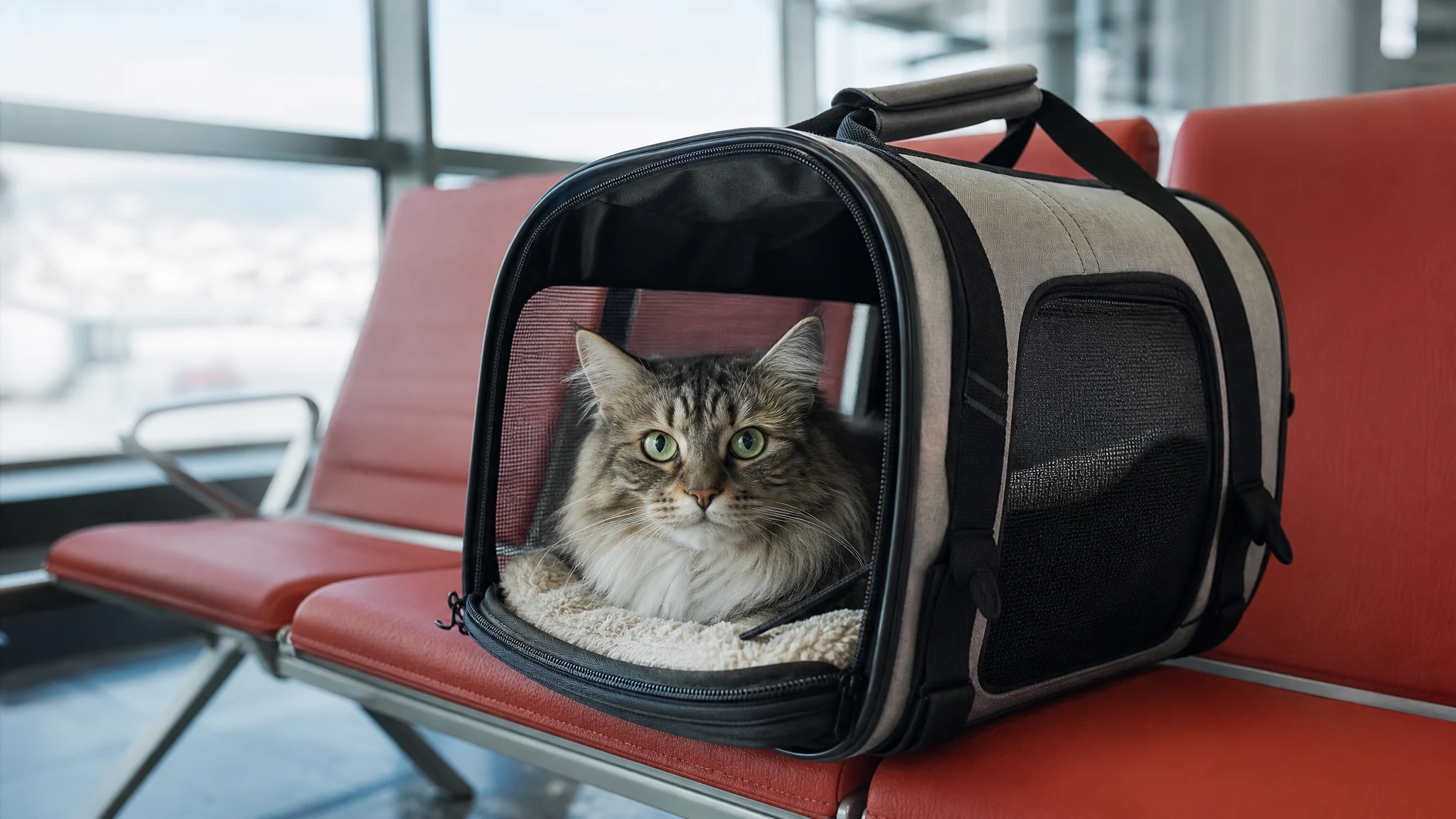
Soft-sided carriers that compress slightly beneath a seat are common, but the carrier must still let your cat stand, turn around, and lie down. Check your airline's stated dimensions rather than trusting the carrier's marketing label.
3. Destination requirements
Entry rules differ by destination. Some states and territories, and many countries, require health certificates, vaccination proof, or quarantine. Hawaii is notably strict. Check with the destination's agriculture or animal-health authority well before you book.
4. Your cat's health
A veterinarian can tell you whether your particular cat is fit to fly. That matters most for senior cats, kittens, and cats with heart, respiratory, or kidney conditions.
What Research Suggests About Cats and Travel Stress
Studies of feline stress behavior in veterinary and travel settings offer some useful observations, although the evidence is more limited than for dogs, and individual cats vary widely. Here is what the research literature generally suggests:
- Carrier familiarity appears to matter. Veterinary behavior guidance, including programs such as Fear Free and the AAFP/ISFM feline-friendly handling guidelines, suggests that cats who have learned to associate the carrier with rest and food tend to show fewer stress behaviors in transit.
- Scent seems to help. Observations from clinical settings suggest that familiar bedding and, for some cats, synthetic feline facial pheromone products may reduce visible signs of stress, though results are mixed and not every cat responds.
- Noise and unpredictability are common stressors. Cats appear to be sensitive to loud, unfamiliar sounds and sudden handling, both of which are hard to avoid in an airport.
- Human-animal bond research is a separate question. Studies on companion animals and owner wellbeing suggest that many people with anxiety or mood concerns find a pet's presence comforting. That research does not establish that a cat is therapeutic during a flight, and it cannot predict how a given cat will cope with one.
The practical point is that a cat who is a calming presence at home may not be a calm traveler. If you rely on your cat during stressful moments, plan other supports for the trip as well. A licensed clinician can help you think through coping strategies for travel anxiety.
Safety Profile and Contraindications
Air travel carries risks for any cat. These are the main ones to discuss with your veterinarian.
- Sedation is generally discouraged. The American Veterinary Medical Association has long advised against sedating pets for air travel unless a veterinarian directs it, because sedatives may affect breathing, body temperature regulation, and balance at altitude. Never give your cat a medication, human or veterinary, without veterinary guidance.
- Flat-faced breeds need extra caution. Persians, Exotic Shorthairs, and similar brachycephalic cats can have narrower airways and may be at higher risk of breathing problems in stressful or low-oxygen conditions. Many airlines restrict these breeds in cargo.
- Cargo is a different risk category. Temperature extremes and handling make the hold a poor choice for most cats. If at all possible, travel with your cat in the cabin.
- Heat and cold. Many airlines impose temperature embargoes on pets, so check them when you book.
- Escape risk. Cats can bolt during security screening, when you must typically remove them from the carrier to pass through the checkpoint. Use a harness with a secure fit and keep a firm hold. This is where an identification tag or microchip registered in a recovery database earns its keep.
If your cat has a history of respiratory distress, heart disease, seizures, or severe anxiety, ask your veterinarian whether flying is appropriate or whether a pet sitter, a boarding facility, or a ground trip is the kinder choice.
Sourcing and Quality Indicators: Choosing Good Information and Good Services
Misinformation about this rule is common, so it helps to know what trustworthy sources look like.
Reliable sources
- The DOT's Office of Aviation Consumer Protection and the text of 14 CFR Part 382 for the federal rule.
- The airline's own current pet policy page, confirmed by phone before you pay.
- Your veterinarian, for health certificates and fitness to fly.
- HUD's FHEO-2020-01 notice and your state's statutes for housing questions.
Red flags
- Any service that promises your cat can fly in the cabin free of charge because of a letter or certificate. Those claims are outdated.
- Any promise of instant or guaranteed approval for a letter. A legitimate evaluation is individual.
- Fly-by-night online services and registries that charge a small fee for a "certified" cat certificate and imply it carries legal force. A registration is not a legal status.
- Providers who cannot show that the clinician is licensed in your state, or who ignore your state's rules, such as Florida's licensing rule or the 30-day relationship in California, Montana, Arkansas, Iowa, and Louisiana.
A Practical Checklist for Flying With Your Cat
- Read your airline's pet policy and confirm it by phone, including fees and carrier dimensions.
- Book a veterinary visit to confirm your cat is fit to fly, ask about vaccination proof and any health certificate, and discuss stress-reduction options.
- Check the destination's entry requirements well ahead of time.
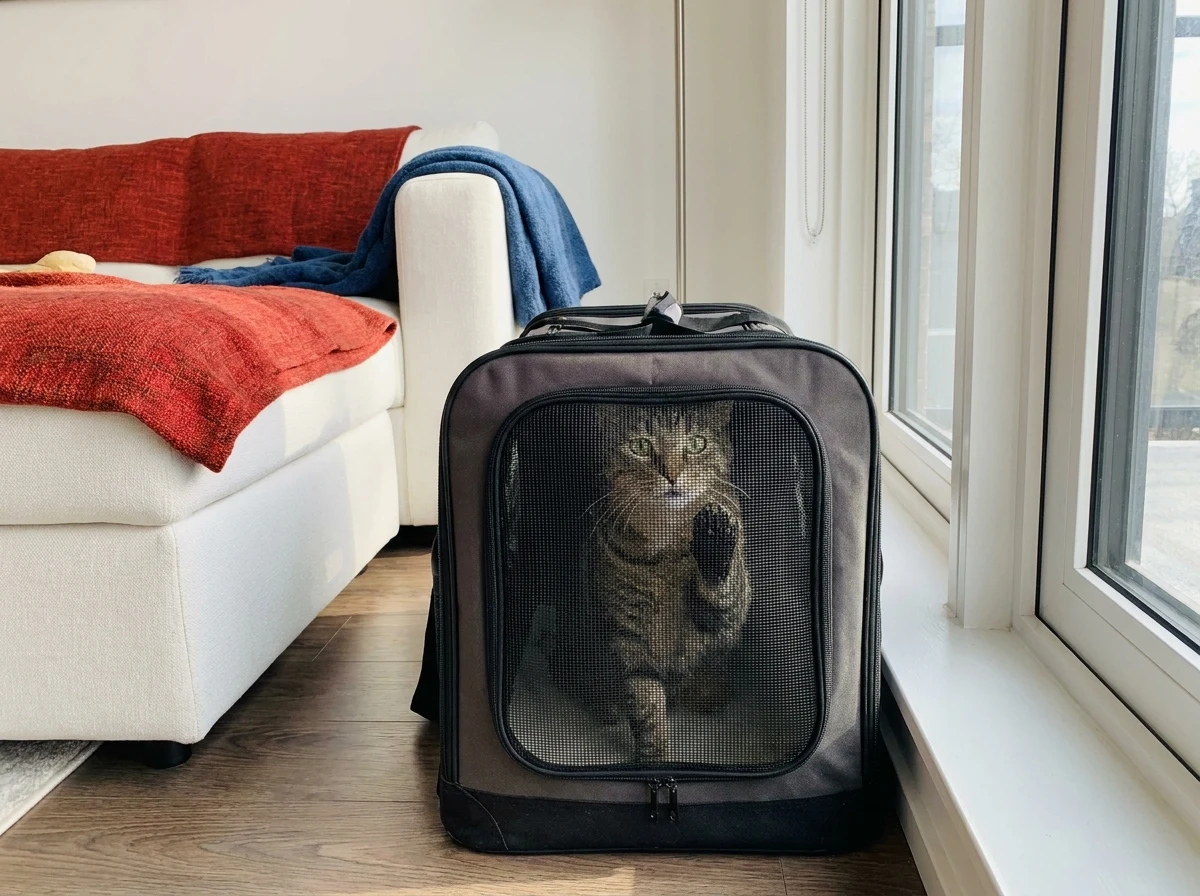
- Start carrier training weeks before the trip, with treats, bedding, and short practice outings.
- Use a secure harness and identification, and make sure your microchip details are current.
- Pack a small kit: absorbent pad, spare liner, wipes, a collapsible water dish, and familiar bedding.
- Arrive early, since pets often add time at check-in and security.
Where This Leaves You
Can you fly with an emotional support cat? You can fly with your cat as a pet, subject to your airline's rules and fees, but emotional support cat flying no longer carries any special ACAA status. A letter from a licensed mental health professional remains meaningful for housing under the Fair Housing Act and applicable state law, not for the cabin. Plan your trip around the airline's pet policy, your veterinarian's advice, and your cat's temperament, and keep your housing paperwork in order at home.
Disclaimer
This article is informational content only and is not medical, mental-health, or legal advice. A licensed clinician in your state will determine whether an emotional support animal is therapeutically appropriate for you. Please consult a mental health professional licensed in your state, review your state's specific rules, and consult an attorney licensed in your state for any landlord dispute. Your local legal aid office can also help with Fair Housing Act enforcement. Consult your veterinarian before traveling with your cat.
Ready to start your ESA letter?
Licensed clinician review. Compliant with state law.
Get My ESA Cat Letter